
AI, infrastructure, and oversight: what today’s tech stories reveal
A quick synthesis of today’s tech headlines: AI-driven operating models and marketing, sustainability projects in buildings and farming, workforce training, and a warning on government data demands.

Today’s technology news spans a wide range of priorities, but a few themes stand out clearly: organizations are reorganizing around AI, companies are applying technology to energy and water efficiency, and public scrutiny remains essential when government agencies seek private data.
Taken together, these stories show that the current tech moment is not just about new models and tools. It is also about how institutions use data, how businesses operationalize AI, and how large platforms and enterprises tie technology investments to measurable outcomes.

AI is reshaping how organizations operate
Microsoft describes a broader shift in how work gets done inside companies, arguing that so-called “frontier firms” are rebuilding their operating models for the age of AI. The core signal comes from software engineering, where the company says teams have moved through four patterns of human-agent collaboration. Microsoft adds that these same patterns are beginning to appear in other business functions as well.
That framing complements Google’s marketing-focused message: in the AI era, businesses need to simplify their data and understand what is driving growth in order to move at the speed AI demands.

What that means in practice
- Operating models are changing: AI is not being presented as a standalone tool, but as part of how teams collaborate and produce work.
- Data simplification matters: Google’s message emphasizes that better decisions depend on cleaner, more understandable data foundations.
- Growth is becoming more measurable: The promise is not just automation, but clearer insight into what is actually driving business performance.
Google’s broader April AI recap and its small-business update reinforce this direction, pointing to a steady stream of AI product development and practical business use cases across Gemini, Workspace, Ads, and related services.


AI and advanced tech are also being tied to sustainability goals
Several of the day’s stories focus less on software interfaces and more on physical-world efficiency.
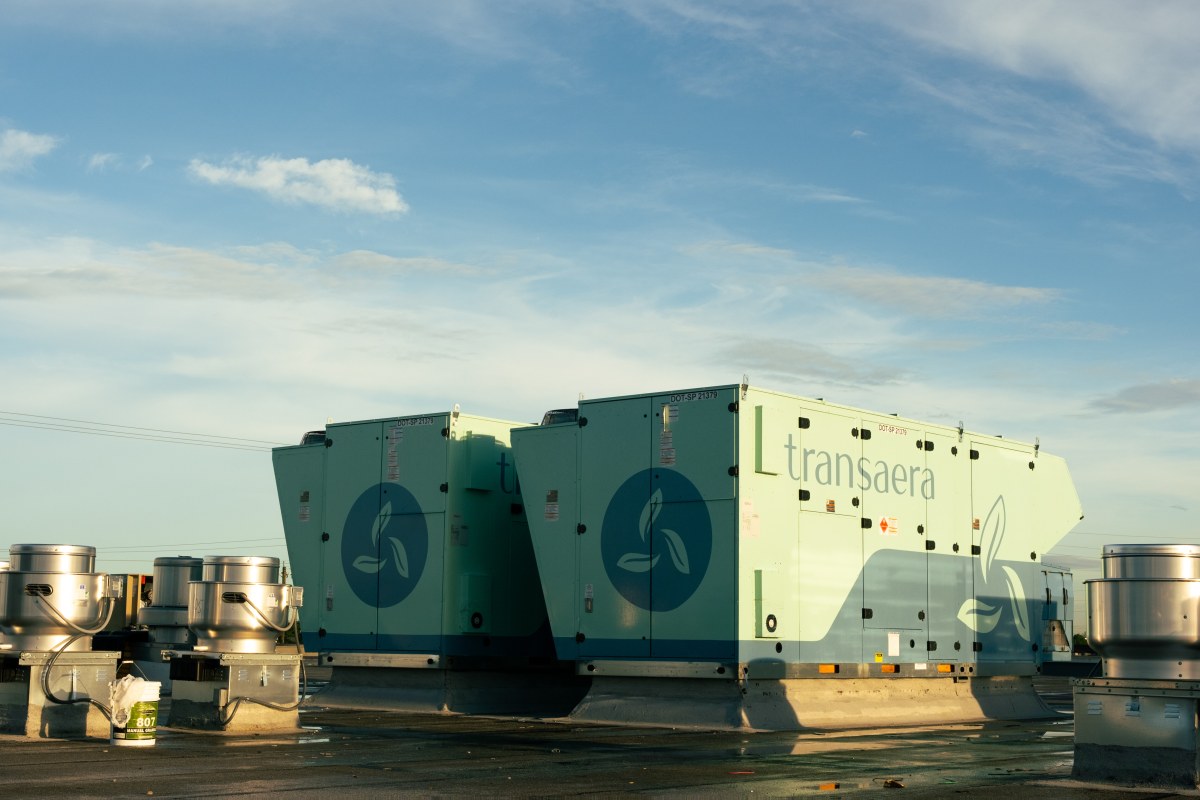
TechCrunch reports that Amazon plans to buy a new kind of HVAC system for its commercial buildings in an effort to cut energy use. The article specifically says the company is betting on a dehumidification approach linked to Nobel Prize-based science to reduce building energy consumption.
Google, meanwhile, says it is supporting Agua Segura and a partner organization to address water quality and availability challenges in Belgium’s Scheldt Basin. The company frames this as a way to help farmers save water with AI.

A common pattern across these efforts
- Technology is being positioned as infrastructure: not just apps and assistants, but systems for buildings, agriculture, and resource management.
- Efficiency is a central selling point: whether the target is energy use or water conservation, the pitch is measurable operational improvement.
- AI is increasingly paired with environmental claims: companies are highlighting practical sustainability applications rather than abstract capability demos.
AI adoption still depends on people learning how to use it
Another recurring theme is workforce readiness. Google says it is adding $10 million to the AI Opportunity Fund to help students, educators, and workers build essential AI skills. In a separate post, the company specifically emphasizes putting educators at the center of AI learning.

This matters because nearly every business-oriented AI announcement ultimately depends on people being able to evaluate, direct, and apply these tools effectively. Training is not separate from adoption; it is one of its prerequisites.
Across these announcements, the underlying message is consistent: AI value comes not only from models themselves, but from the skills, workflows, and institutional structures built around them.
A sharp reminder that technology power also raises civil-liberties concerns
Not all of today’s tech news is optimistic. Ars Technica reports that DHS used a 1930s customs law in an attempt to obtain data from Google about a Canadian man who, according to the article, had not entered the United States for years and was targeted over criticism of ICE operations.

Even from the brief details available here, the story stands apart from the day’s many AI-growth narratives. It highlights a different side of the technology ecosystem: platforms hold sensitive user data, and government attempts to access that data can become major accountability and rights issues.
That makes oversight just as important as innovation. As companies encourage more activity to flow through AI systems, cloud platforms, and online services, questions about data access, legal authority, and proportionality do not become secondary; they become more urgent.
The bigger picture
If there is one throughline connecting these stories, it is that technology is becoming more embedded in decision-making at every level.
- Businesses are being told to simplify data so AI can accelerate growth.
- Firms are reworking internal collaboration around human-agent patterns.
- Large enterprises are applying advanced systems to energy efficiency.
- AI projects are being linked to water conservation and agricultural resilience.
- Training investments are being positioned as essential to broad adoption.
- At the same time, data governance and government power remain critical fault lines.
In short, today’s headlines suggest that the next phase of technology is not only about what AI can do, but about where it is being embedded, who controls the resulting systems, and how responsibly that power is exercised.
References & Credits
- DHS abuses 1930s customs law in attempt to get data on Canadian from Google — Ars Technica
- Turn your data into decisions: 3 things your business needs for growth in the AI era — Google
- Amazon bets Nobel Prize-based dehumidification can cut its energy use — TechCrunch
- How Frontier Firms are rebuilding the operating model for the age of AI — Microsoft
- Here’s how we’re helping Belgium's farmers save water with AI. — Google
- Putting educators at the center of AI learning — Google
- The latest AI news we announced in April 2026 — Google
- Here's how Google AI is powering small business growth — Google