
AI coding, EV platforms, fleet resilience, and edtech security: today’s tech crosscurrents
A quick synthesis of five notable stories: Anthropic’s Claude Code auto mode, Ford’s EV skunkworks, Netflix fleet reliability strategy, Instructure’s student-data breach, and Moment Energy’s battery reuse push.

Today’s technology news cycle spans a striking mix of autonomy, infrastructure, resilience, and risk. Across software development, electric vehicles, cloud operations, cybersecurity, and energy storage, the common thread is operational scale: how companies automate more, build cheaper, stay reliable, and manage the fallout when systems fail.
Anthropic pushes coding automation with approval gates
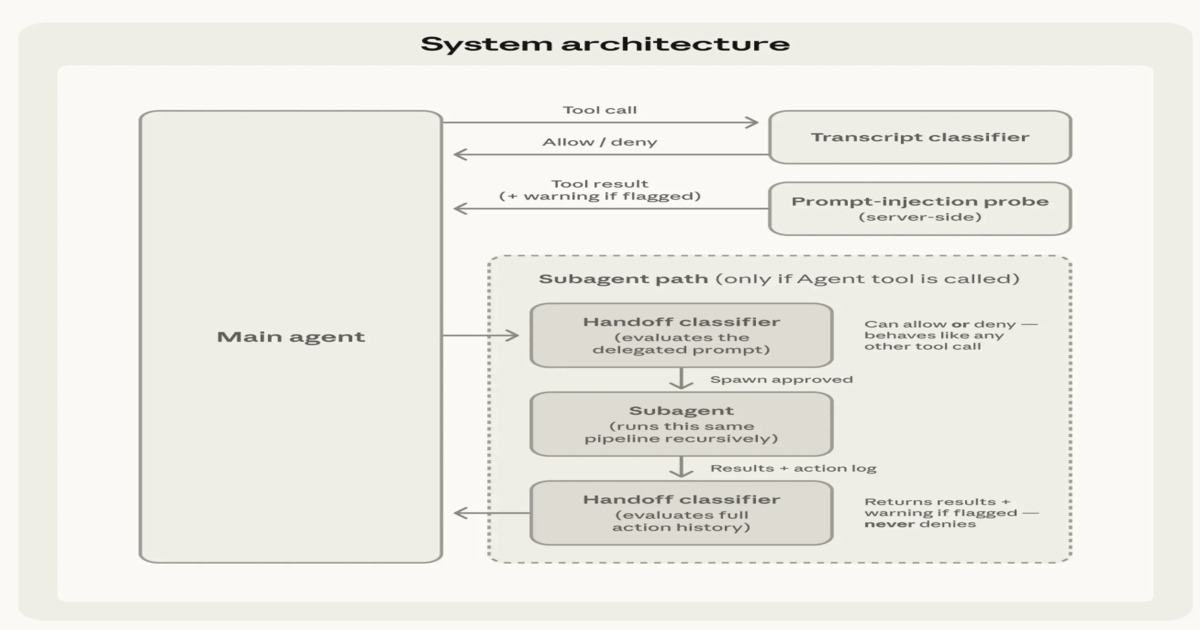
Anthropic introduced auto mode in Claude Code to support multi-step software development workflows with less manual intervention. According to InfoQ, the system is designed to automate execution while still preserving safety controls for more sensitive actions.
The reported safeguards include:
- Input filtering
- Action evaluation
- Two-stage classification
- Human approval checkpoints for sensitive operations
That combination suggests a pattern that is becoming increasingly common in enterprise AI tooling: broader autonomy for routine work, paired with explicit approval gates where risk rises.
Ford’s skunkworks and the idea of a $30,000 electric pickup
Ars Technica reports from Ford’s top-secret Electric Vehicle Development Center in California, framing the effort around a central question: how do you design a $30,000 electric pickup?
The source article excerpt is brief, but the headline and setup highlight the importance of cost-focused EV development. In a market where price remains one of the biggest adoption hurdles, a program oriented around a lower-cost electric truck points to the ongoing industry push to make EVs more accessible beyond premium segments.

Netflix on efficiency versus reliability at global scale
In an InfoQ presentation, Netflix engineers described the tension between service efficiency and reliability across the company’s global fleet. Rather than optimizing around simple CPU utilization, they discussed a mental model centered on risk-adjusted net value and the importance of capacity buffers.
The presentation summary highlights several mechanisms Netflix uses:
- Hardware shaping
- Proactive traffic steering
- Reactive controls such as “hammers”
- Prioritized load shedding to protect critical playback
The broader lesson is that at massive scale, efficiency cannot be treated as a standalone metric. Reliability requires slack, prioritization, and preplanned operational levers.

Instructure breach raises concerns over student data exposure
TechCrunch reports that hackers stole data during a breach at education technology company Instructure, and that the compromised information includes students’ private data, based on a sample of allegedly stolen records reviewed by the publication.
Even from that limited summary, the implications are serious. Student data incidents can carry long-term privacy consequences, particularly when education platforms hold sensitive personal information at significant scale.

Moment Energy bets on second-life EV batteries
TechCrunch also reports that Moment Energy raised $40 million, with CEO Edward Chiang describing what the company sees as effectively “infinite demand for power.” The startup’s approach is built around repurposing EV batteries.
The framing is notable because it connects two major trends at once: the growth of electric vehicles and the demand for additional power and storage capacity. Reusing EV batteries could extend the useful life of battery assets while serving broader energy needs.
A shared pattern: scaling with guardrails
Though these stories come from very different corners of tech, they point in a similar direction. Companies are trying to unlock more value from complex systems:
- AI tools are taking on longer workflows, but with approval checkpoints.
- Automakers are rethinking EV design around affordability.
- Streaming infrastructure is tuned for both utilization and survivability.
- Security failures show the cost of operating at scale without perfect protection.
- Battery startups are extracting more value from existing EV components.
If there is one takeaway, it is that the next phase of technology competition is not just about innovation in isolation. It is about building systems that are cheaper, safer, more resilient, and more efficient without losing control.
References & Credits
- InfoQ: Inside Claude Code Auto Mode: Anthropic’s Autonomous Coding System with Human Approval Gates
- Ars Technica: How do you design a $30,000 electric pickup? Inside Ford's skunkworks.
- InfoQ: Presentation: How Netflix Shapes our Fleet for Efficiency and Reliability
- TechCrunch: Hackers steal students’ data during breach at education tech giant Instructure
- TechCrunch: Moment Energy raises $40M to meet ‘infinite demand for power’ with EV batteries