
AWS rolls out serverless, AI desktop, media ad-tech, cache observability, and IoT updates
AWS introduced updates across SAM, WorkSpaces, MediaTailor, ElastiCache, and IoT Core for Device Location, adding faster builds, WebSocket support, AI-operated desktops, simpler Google ad integration, and richer metrics.
AWS announced a broad set of platform updates spanning serverless development, AI automation for legacy desktop software, streaming ad-tech integration, cache observability, and device location controls. Together, these launches focus on reducing manual setup, improving operational visibility, and expanding where developers can apply automation.
Serverless development gets more capable in AWS SAM
BuildKit support for Lambda container images
AWS Serverless Application Model Command Line Interface (SAM CLI) now supports BuildKit for building Lambda functions packaged as container images. According to AWS, this brings faster and more efficient image builds from Dockerfiles and unlocks advanced build features that were previously unavailable in SAM CLI.
AWS highlighted several practical benefits of BuildKit support:
- Multi-stage builds to produce smaller final images without development dependencies
- Improved caching to reduce rebuild times
- Better parallelization during builds
For teams packaging Lambda functions as container images, the update should make local build workflows more production-friendly while reducing friction in optimizing images.
WebSocket APIs now supported in AWS SAM
AWS SAM also now supports WebSocket APIs for Amazon API Gateway. This lets developers define complete WebSocket APIs with minimal configuration directly in SAM templates.
AWS positioned the feature as especially useful for real-time applications, including:
- Chat applications
- Live dashboards
- AI/LLM streaming use cases
- IoT scenarios
Previously, developers had to manually configure the underlying AWS CloudFormation resources, which AWS says made common issues such as missing IAM permissions harder to debug. With the new support, SAM automatically generates the required resources and permissions from the template.
Amazon WorkSpaces gives AI agents a way into desktop-only workflows
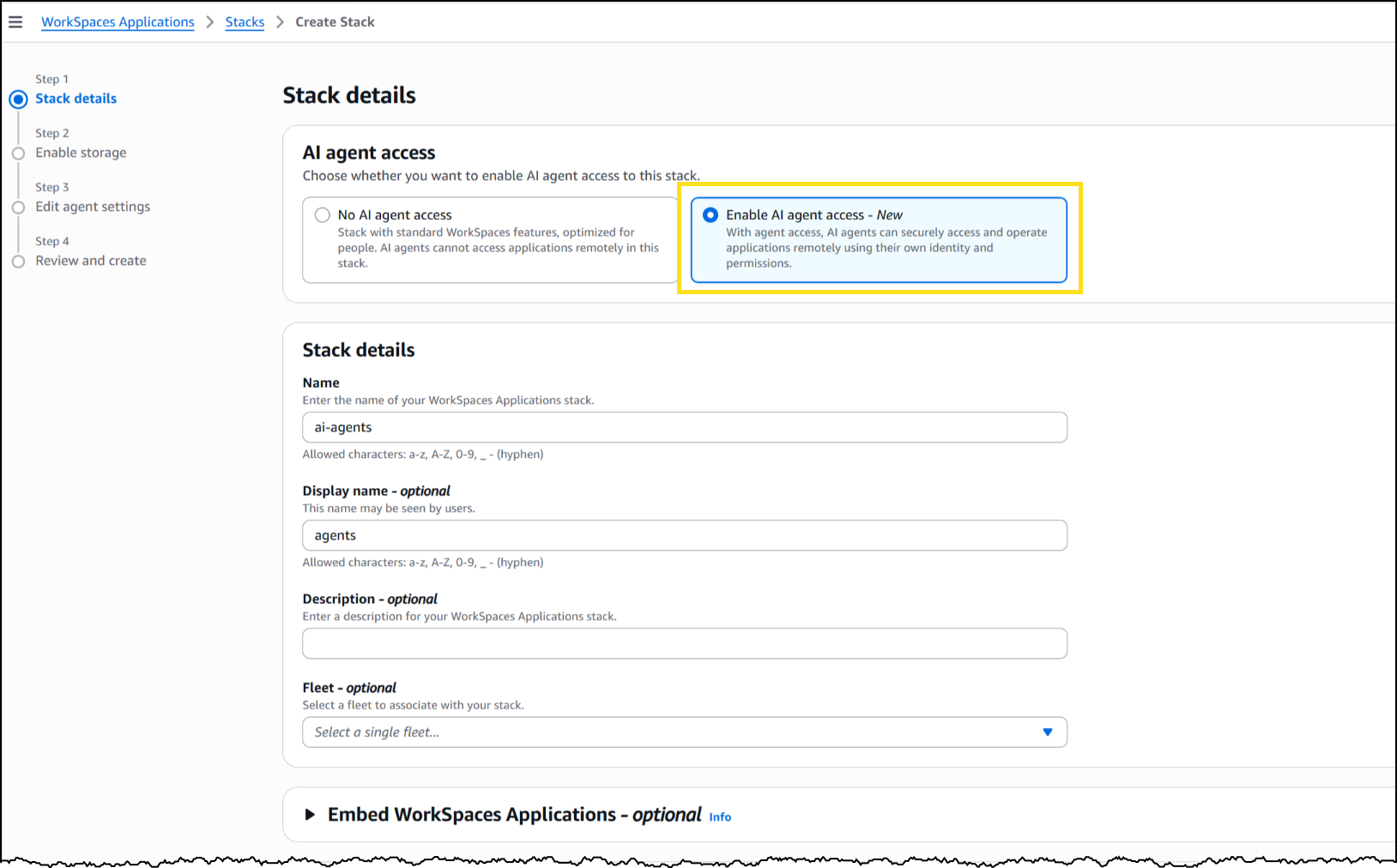
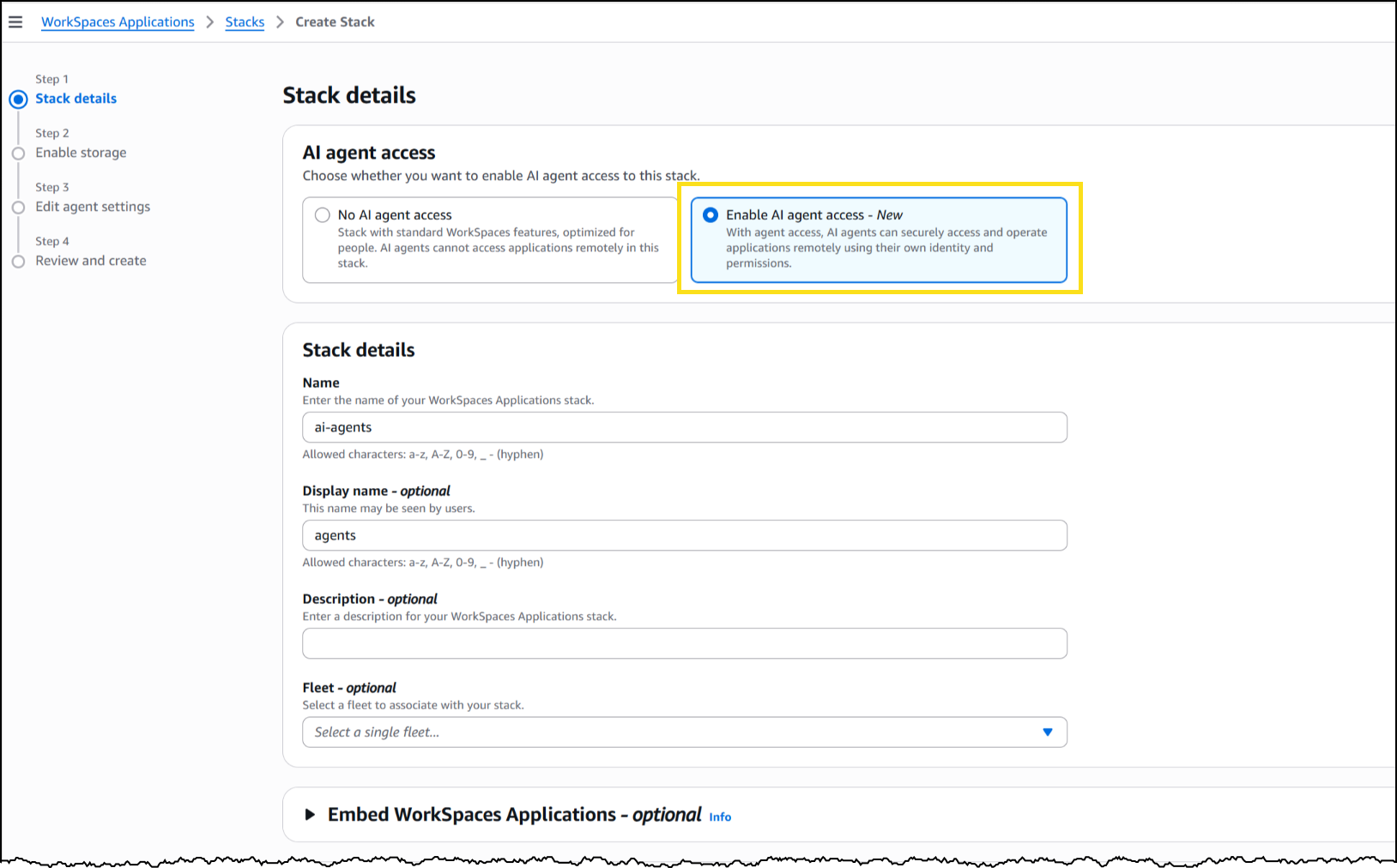
Amazon WorkSpaces now enables AI agents to securely access and operate desktop applications through managed WorkSpaces environments, currently in preview. AWS framed this as a response to the “last-mile challenge” many enterprises face when critical processes still depend on desktop applications such as mainframes, ERP systems, and proprietary tools that do not expose modern APIs.
According to AWS, AI agents built on any framework and running in cloud, on-premises, or hybrid environments can connect to business applications with minimal code through Model Context Protocol (MCP) integration. The company says this allows organizations to automate workflows at scale while preserving enterprise-grade governance and compliance.
Amazon WorkSpaces now lets AI agents securely operate legacy desktop applications—without APIs or modernization—using IAM authentication, MCP support, and computer vision within existing security frameworks.
AWS also emphasized that builders can achieve faster time-to-value without standing up new infrastructure.
MediaTailor simplifies secure integration with Google ad platforms
AWS Elemental MediaTailor now automatically authenticates server-to-server connections with Google Ad Manager (GAM), Google Campaign Manager (GCM), and Google Display & Video 360 (DV360).
MediaTailor provides server-side ad insertion (SSAI) to personalize ads in video streams. AWS noted that Google requires SSAI providers to establish secure, authenticated connections when making ad requests and firing ad tracking events.
Before this change, customers had to request activation through an AWS support case and be added to an allow list. Now MediaTailor automatically detects requests headed to Google ad servers and establishes the required secure connection, removing that extra customer setup step.
ElastiCache adds deeper diagnostics through CloudWatch
Amazon ElastiCache introduced thirteen new Amazon CloudWatch metrics for node-based clusters, aimed at helping customers detect network throttling, memory fragmentation, and connection exhaustion without needing to run INFO commands on individual nodes or derive baselines from raw byte counters.
AWS called out a new set of network capacity metrics:
- NetworkBaselineUsageInPercentage
- NetworkBaselineUsageOutPercentage
- NetworkBaselineMaxUsageInPercentage
- NetworkBaselineMaxUsageOutPercentage
These metrics report utilization relative to instance baseline. AWS says this enables more portable alarms that remain useful even if instance types change. Values above 100% indicate a host is consuming burst credits, which can serve as a leading indicator that a sustained workload may eventually be throttled.
The broader addition is designed to provide host-level and engine-level diagnostics directly in CloudWatch, improving observability for operations teams.
More control in AWS IoT Core for Device Location
AWS IoT Core for Device Location now adds two enhancements: Confidence Level Configuration and Measurement Type support.
For customers using the Cell ID, Wi-Fi, or Cell+Wi-Fi solvers, AWS now allows a desired confidence level between 50% and 99% when resolving device locations. AWS explained the tradeoff clearly:
- Higher confidence levels, such as 95%, increase certainty that the device falls within the reported radius, but produce a larger accuracy radius
- Lower confidence levels, such as 50%, produce a smaller radius with less certainty
This gives developers more flexibility to balance accuracy radius and statistical confidence based on their application needs.
What these updates signal
Across these releases, AWS is pushing in a consistent direction: reducing operational overhead and extending automation into environments that previously required custom work. In practical terms, that means less manual infrastructure configuration in SAM, fewer support dependencies in MediaTailor, more direct observability in ElastiCache, finer-grained controls in IoT location services, and a new bridge for AI agents to interact with desktop-bound enterprise processes through WorkSpaces.
References & Credits
- AWS SAM CLI adds BuildKit support for AWS Lambda functions packaged as container images
- AWS SAM now supports WebSocket APIs for Amazon API Gateway
- Amazon WorkSpaces now lets AI agents operate desktop applications (Preview)
- Modernize your workflows: Amazon WorkSpaces now gives AI agents their own desktop (preview)
- AWS Elemental MediaTailor now provides automatic secure server-to-server integration with Google's ad platforms
- Amazon ElastiCache adds thirteen new Amazon CloudWatch metrics for network capacity planning and engine diagnostics
- AWS IoT Core for Device Location adds Confidence Level Configuration and Measurement Type support