

AI this week: markets, media, money, and the grid
A roundup of how AI is colliding with market oversight, copyright disputes, academic publishing, personal finance, creative tools, and rising electricity demand.
Artificial intelligence is showing up in very different corners of the tech world at once: regulation, publishing, entertainment, consumer finance, and even electricity markets. Based on the source reporting below, this snapshot highlights how AI is becoming both a tool and a source of pressure across multiple industries.

AI for market oversight
According to Ars Technica, the US Commodity Futures Trading Commission is signaling that it is taking insider trading in prediction markets very seriously. The article says the agency is betting on AI to help catch that behavior.
"The Commodity Futures Trading Commission wants us to know it's taking this very seriously."
Even from the limited source details provided, the takeaway is clear: regulators increasingly see AI not just as a sector to supervise, but as an enforcement tool.
Copyright and publishing tensions
Anthropic settlement faces pushback
Ars Technica reports that Anthropic's proposed $1.5 billion copyright settlement has become more complicated after a judge delayed approval. The reported dispute centers on criticism that lawyers rushed a historic settlement while seeking $320 million in fees.

"Lawyers accused of rushing historic settlement to seize $320 million in fees."
The case underscores how AI-era copyright battles are not just about model training and rights holders, but also about how any resulting payouts are structured and distributed.
arXiv cracks down on AI-generated submissions
In scientific publishing, Ars Technica says arXiv plans tough penalties for submitters of AI-generated hallucinations. One moderator described the new policy on social media, and the headline indicates that those who send AI-generated "slop" could face a yearlong submission ban.
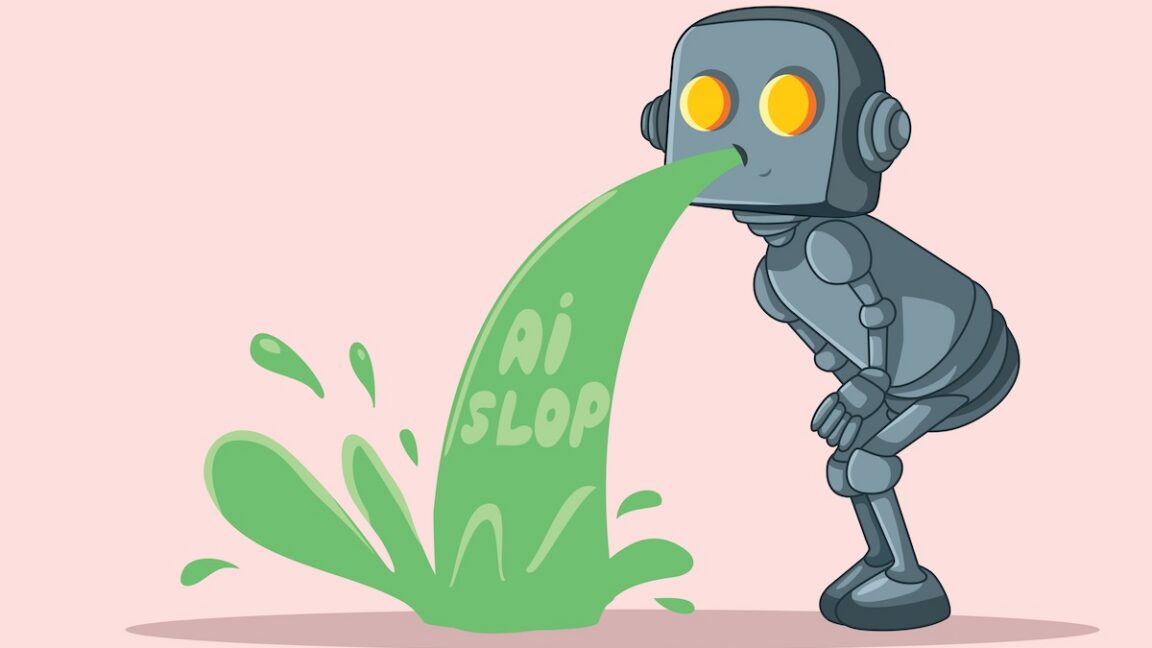
That suggests a firmer line from a major preprint platform as AI-generated text becomes easier to produce and harder to screen at scale.
AI products keep expanding into daily life
OpenAI and personal finance
TechCrunch reports that OpenAI has launched ChatGPT for personal finance and will let users connect bank accounts. Once connected, users can view a dashboard covering portfolio performance, spending, subscriptions, and upcoming payments.

This points to a broader trend: AI assistants moving from general chat interfaces into higher-trust workflows involving sensitive financial data.
OpenAI-Apple friction
Another Ars Technica report says OpenAI feels "burned" by Apple's ChatGPT integration. The source details provided add that a judge ordered Apple to give Elon Musk internal messages discussing the secretive ChatGPT deal.

Even with limited detail, the story suggests that major AI partnerships can quickly become legally and strategically fraught.
AI competition in creative tools
TechCrunch reports that Runway, which began by helping filmmakers, now wants to compete more directly with Google in AI. The company is betting that video generation is the road to world models, and that being an outsider can be an advantage.

The framing is notable because it links creative tooling with broader ambitions in foundational AI development.
The hidden constraint: electricity
Power prices on the rise
Two TechCrunch reports connect AI growth to energy stress. One says power prices are up 76% on America's biggest grid, with a watchdog pointing to structural problems. The article describes the spike as a reminder that the US grid was not built for the electricity demands of an AI-driven economy.
"The U.S. power grid was not designed for the electricity demands of an AI-driven economy."
Lake Tahoe feels the pressure too
Another TechCrunch article says Lake Tahoe, a favorite vacation destination for Silicon Valley, may soon face higher energy prices as AI drives electricity demand upward.

Taken together, these stories suggest that AI's expansion is no longer just a software story. Infrastructure constraints, especially electricity supply and pricing, are becoming central to the industry's next phase.
What ties these stories together
- AI as an enforcement tool: Regulators are exploring it for market surveillance.
- AI as a legal flashpoint: Copyright settlements and platform partnerships remain contentious.
- AI as a publishing risk: Platforms like arXiv are responding to low-quality or hallucinated submissions.
- AI as a consumer product: Financial services are becoming a new frontier for assistants.
- AI as an infrastructure stress test: Electricity demand is emerging as a hard limit.
Across all of these stories, the recurring theme is that AI is no longer confined to research labs or chatbots. It is interacting directly with institutions that move more slowly and carry higher stakes: courts, grids, financial systems, and scientific publishing.
References & Credits
- The US is betting on AI to catch insider trading in prediction markets — Ars Technica
- Anthropic’s $1.5B copyright settlement is getting messy as judge delays approval — Ars Technica
- Send the arXiv AI-generated slop, get a yearlong vacation from submissions — Ars Technica
- OpenAI launches ChatGPT for personal finance, will let you connect bank accounts — TechCrunch
- OpenAI feels “burned” by Apple’s crappy ChatGPT integration, insiders say — Ars Technica
- Runway started by helping filmmakers — now it wants to beat Google at AI — TechCrunch
- Power prices are up 76% on America’s biggest grid, and a watchdog is pointing fingers — TechCrunch
- Silicon Valley’s vacationland needs a new energy provider just as AI is driving prices up — TechCrunch