
AI infrastructure and analytics updates: AWS data workflows, FSx networking, and Google Cloud advances
A roundup of recent AWS and Google Cloud announcements spanning AI-assisted analytics, shared-VPC storage, LLM-powered SQL, AI platforms, transportation, digital health, and video clipping.
Cloud vendors announced a broad set of updates this week that point to a common theme: making AI more usable inside real production workflows. From natural-language analytics and shared-network storage on AWS to Google Cloud updates in AI platforms, data analytics, public sector transportation, digital health, and media processing, the focus is on reducing operational friction while scaling new capabilities.
AWS: easier analytics and more flexible storage deployment
Amazon SageMaker Data Agent expands to IAM Identity Center domains
Amazon SageMaker Data Agent is now available in SageMaker Unified Studio domains configured with IAM Identity Center. According to AWS, the service helps data analysts and engineers streamline analytics workflows across both SageMaker notebooks and Query Editor environments.
The key idea is to reduce manual coding work. Users can describe analysis goals in plain English and receive working Python or SQL code tailored to connected data sources such as Amazon Athena, Amazon Redshift, Amazon S3, and AWS Glue Data Catalog.
- Works across notebooks and Query Editor
- Generates Python or SQL from plain-English prompts
- Maintains conversational context across notebook cells, selected tables, and query history
- Proposes step-by-step plans before generating code
AWS says this can help eliminate the need to manually write complex SQL joins, aggregations, and Python code in common analytics tasks.
Amazon FSx for OpenZFS adds Multi-AZ support in shared VPCs
AWS also announced that Amazon FSx for OpenZFS now supports creating Multi-AZ file systems in shared VPCs within an AWS organization. The update is aimed at organizations that want to decentralize network and storage administration.
In AWS's description of VPC sharing, owner accounts share one or more VPC subnets with participant accounts, which can then create and manage application resources in those shared subnets. Previously, participant accounts could create Single-AZ OpenZFS file systems in shared VPCs, but could only create Multi-AZ file systems in VPCs they owned.
With this change, participant accounts can create any FSx for OpenZFS file system in a shared VPC.
This removes a prior limitation for Multi-AZ OpenZFS deployments and gives organizations more flexibility in how they separate ownership of networking and application resources.
Google Cloud: AI platform momentum and practical AI deployment patterns
Google highlights Gartner AI application development recognition
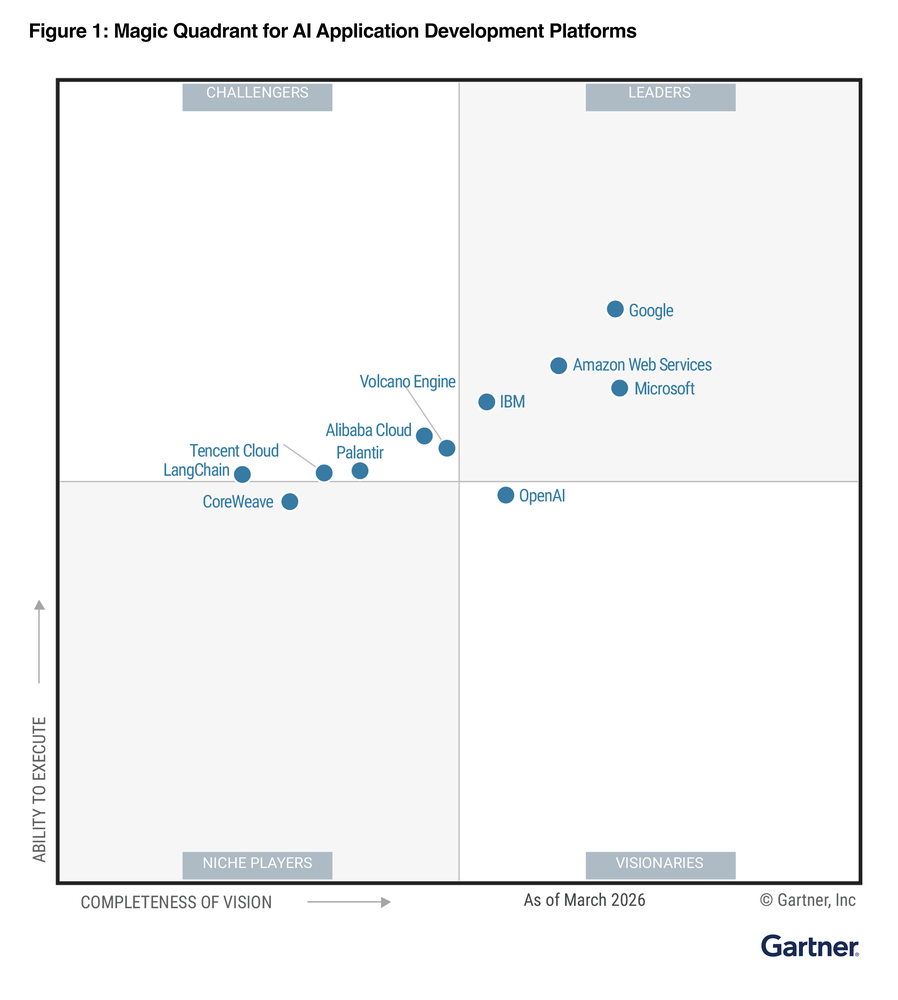
Google Cloud published an update on its position in the Gartner Magic Quadrant for AI Application Development Platforms. The company said it was recognized as a Leader in the inaugural report last fall and that the May 2026 mid-cycle update reflects continued momentum.
Google states that in the update it is positioned highest in Ability to Execute and ranked #1 across the three use cases assessed in the associated Critical Capabilities report. The post also ties this momentum to platform changes since last November, including updates announced at Google Cloud Next '26 and the unification of Vertex AI with newer Google AI capabilities.
LLM-powered SQL gets a speed and cost focus
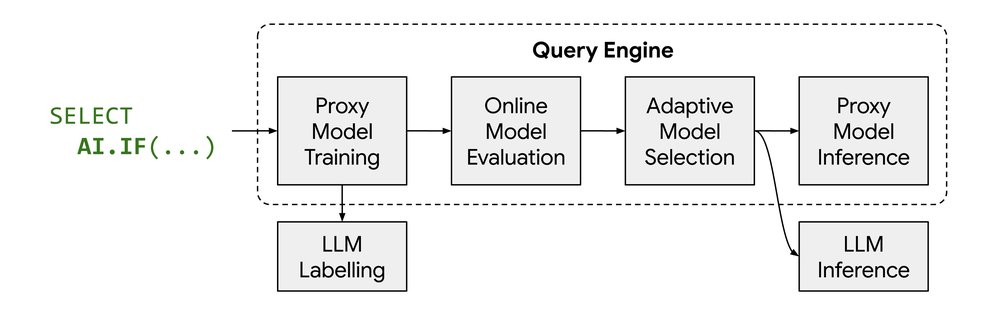
Google Cloud also detailed work on making LLM-powered SQL queries dramatically more practical. The article explains that newer AI-powered SQL functions let users express natural-language instructions inside database queries, enabling semantic analysis such as identifying negative product reviews about durability or support tickets resolved through workarounds.
The challenge, as described in the post, is that direct LLM invocations can add 10-100x to overall query latency and roughly 1000x on cost. Google frames this as a major barrier for operational databases and large-scale analytics.
The company says its approach can make these queries more than two orders of magnitude faster and cheaper.
AI in industry-specific systems
Transportation resilience and safety
In the public sector, Google Cloud argued that AI can help transportation agencies improve safety, resilience, and efficiency. The post connects this to the broader Vision Zero goal of reducing fatalities in transportation systems.
The article frames transportation challenges in everyday terms—trains arriving on time, smoother flight connections, lower-stress commutes, and safer walking and biking—while emphasizing that safety remains the core mission for agencies and sector workers.

Digital health and cloud as the foundation for SaMD
Google Cloud's digital health post focuses on software as a medical device, or SaMD. Examples cited include AI image analysis for cancer detection, diagnostic mobile apps for viewing MRIs, and software that calculates insulin dosages.
The article argues that the industry is moving from reactive diagnostics toward proactive, prognostic learning systems. In that model, modern SaMD becomes a composite system in which clinical functionality emerges from interactions among embedded firmware, mobile apps, and cloud-resident services.
Google's central claim is that this transition requires a new way to demonstrate a state of control, making cloud infrastructure foundational rather than optional.
Turning long-form video into mobile-ready clips
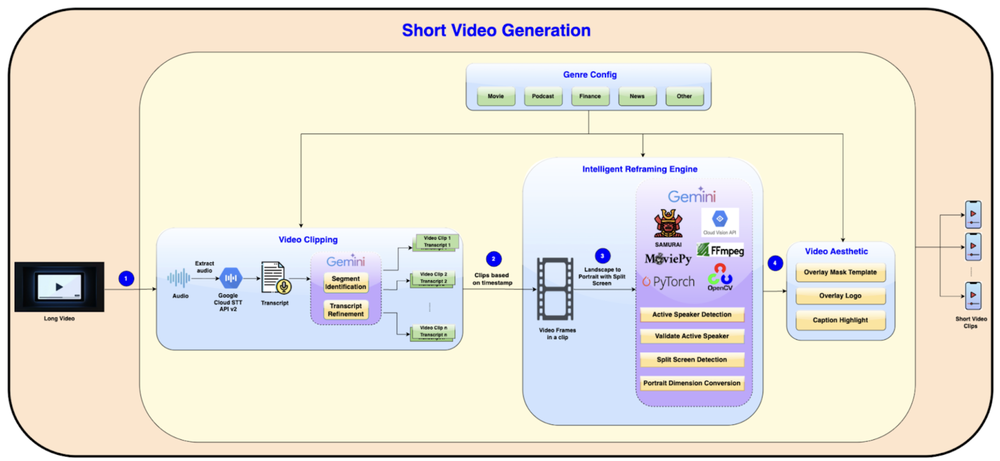
Another Google Cloud case study spotlights Glance, a mobile-first content platform that transforms 1-2 hour videos from podcasts, news reports, movies, and web series into 30 to 180-second vertical clips for mobile lock screens.
The scale described in the post is significant: daily volume is projected to grow from 3,500 to more than 10,000 videos per day. Google says manual editing was not realistic, and the problem required more than basic cropping.
- Identify and center the primary speaker
- Dynamically split screens to stack speakers vertically during conversations
- Convert long-form horizontal video into short vertical clips for mobile viewing
What ties these announcements together
Across these releases, the pattern is consistent: vendors are pushing AI deeper into operational systems rather than treating it as a separate experimental layer.
- AWS is simplifying analytics authoring and infrastructure deployment constraints.
- Google Cloud is emphasizing both platform positioning and practical AI efficiency improvements.
- Industry-specific use cases show AI being applied to transportation, healthcare, and media workflows where scale, safety, latency, and operational control matter.
That combination suggests the market is moving beyond generic AI promises toward implementation details that determine whether these systems are actually useful in production.
References & Credits
- Amazon SageMaker Data Agent now available for IAM Identity Center domains
- Amazon FSx for OpenZFS now supports creating Multi-AZ file systems in shared VPCs
- Google Named a Leader in the Gartner Magic Quadrant for AI Application Development Platforms: Mid-cycle update
- The power of LLMs on your data, more than two orders of magnitude faster and cheaper
- Smart moves: Building resilient transportation systems with Google AI
- The new era of SaMD: Why cloud infrastructure is the foundation for digital health in 2026
- How Glance turns hours of video into mobile-ready clips with AI