Cloud Platform Updates: AWS Scheduling, Security, Redshift, and Google Cloud Scale
A roundup of notable cloud updates: scheduled scaling for Lambda Managed Instances, broader EventBridge scheduling APIs, AWS security and data platform launches, plus Google Cloud AI and infrastructure news.
Several notable platform updates landed across AWS and Google Cloud, spanning serverless operations, security analysis, data infrastructure, Kubernetes resilience, machine learning tooling, and high-scale media delivery.
This roundup focuses on what each launch adds and where the announcements connect, especially around automation, scale, and operational efficiency.
AWS expands time-based automation for serverless capacity
AWS announced that AWS Lambda now supports scheduled scaling for functions running on Lambda Managed Instances through Amazon EventBridge Scheduler. The new capability allows teams to define one-time or recurring schedules that proactively adjust function capacity limits ahead of expected traffic.
According to AWS, this is aimed at predictable demand patterns such as business-hours applications or marketing events, helping customers meet performance targets during peak periods while avoiding unnecessary cost during idle periods.
Lambda Managed Instances lets customers run Lambda functions on managed Amazon EC2 instances with built-in routing, load balancing, and autoscaling. Capacity scales between configured minimum and maximum execution environment limits based on traffic.
This launch pairs directly with a second AWS announcement: Amazon EventBridge Scheduler added 619 new SDK API actions across 13 additional services, including support related to Lambda Managed Instances. AWS says customers can now schedule a broader set of AWS API actions directly from Scheduler without writing custom integration code.
Taken together, the two launches make EventBridge Scheduler a more central control point for proactive capacity management, including scaling Lambda Managed Instances up or down on a time-based schedule.
AWS pushes deeper into AI-assisted security reviews
AWS also introduced full repository code review in AWS Security Agent. AWS describes it as a deep, context-aware security analysis capability that evaluates an entire codebase rather than only matching snippets against known vulnerability patterns.
The company says the feature reasons about application architecture, trust boundaries, and data flows to surface systemic vulnerabilities that traditional pattern-matching tools may miss. When issues are found, the scanner generates remediation guidance tied to exact files and lines to help teams fix problems more quickly.
AWS says this capability is available in preview at no additional charge for existing AWS Security Agent customers.
Data and ML updates: Redshift performance gains and SageMaker SDK modernization
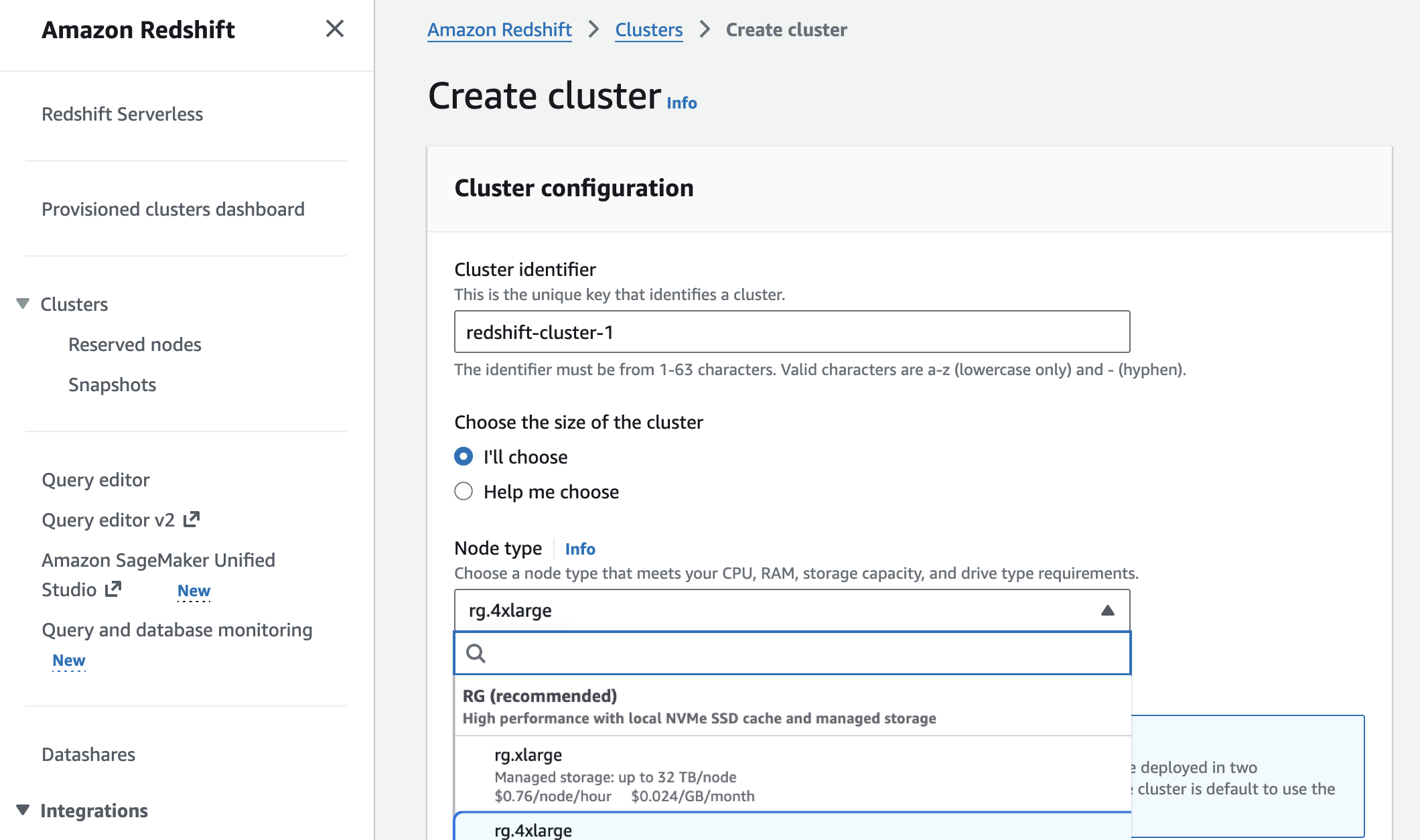
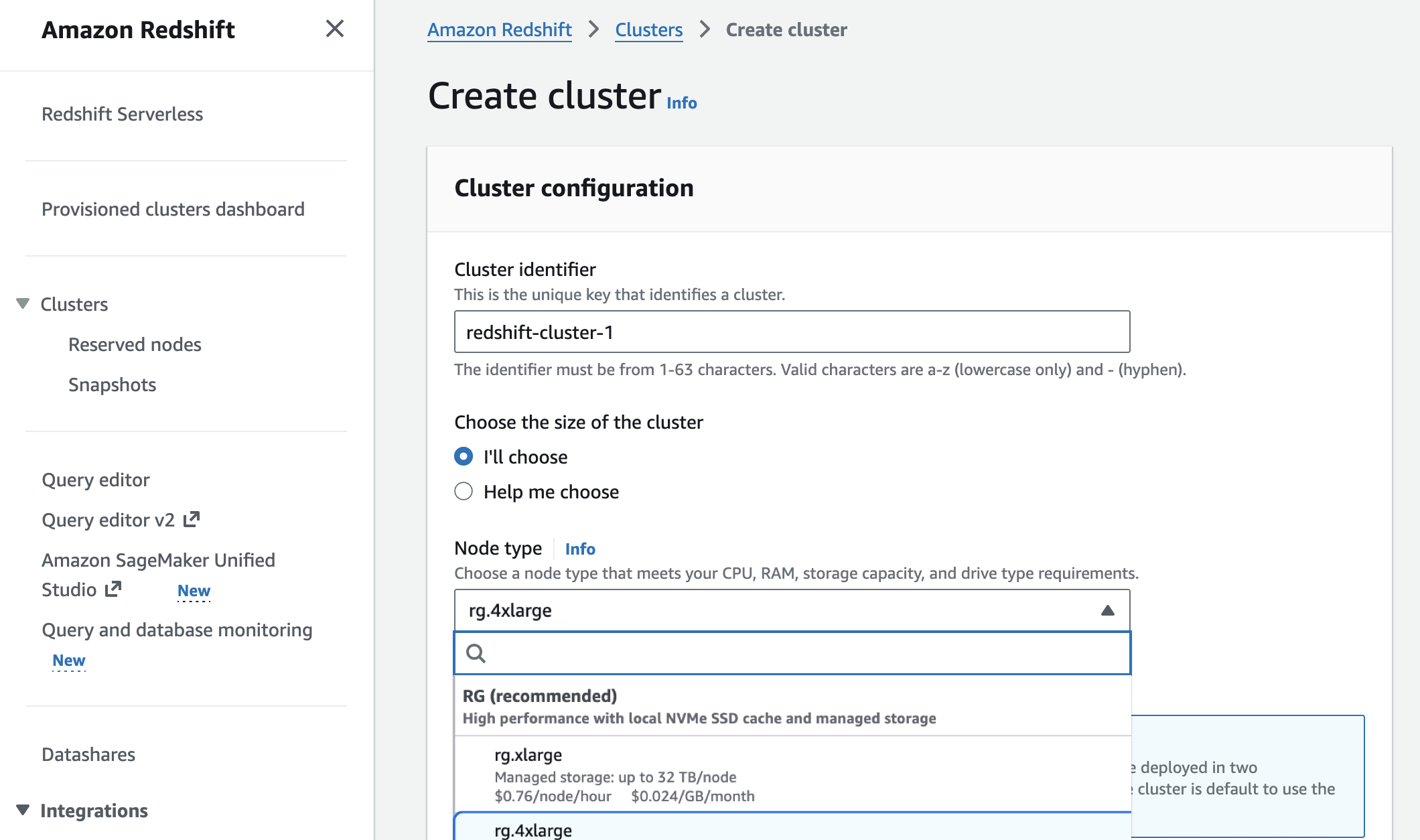
On the analytics side, AWS introduced Amazon Redshift RG instances, powered by AWS Graviton. AWS says these instances run data warehouse and data lake workloads up to 2.4x as fast as RA3 instances at 30% lower price per vCPU.
Redshift RG instances also include an integrated data lake query engine with support for open table formats such as Apache Iceberg.
For machine learning workflows, Amazon SageMaker Feature Store now supports SageMaker Python SDK v3. AWS says the update includes support for Lake Formation access controls and Apache Iceberg table properties configuration.
With the SDK v3 interfaces, data scientists can manage feature groups with more streamlined workflows and less boilerplate. AWS also says Lake Formation integration enables opt-in column-level and row-level access control on offline store data at feature group creation time.
Kubernetes resilience gets a zonal recovery boost
AWS announced that Amazon EKS now supports Amazon Application Recovery Controller (ARC) zonal shift and zonal autoshift when using Karpenter for compute provisioning.
AWS says the integration helps customers maintain Kubernetes application availability by shifting in-cluster network traffic away from an impaired Availability Zone. For teams running highly available EKS deployments across multiple AZs, the feature is designed to reduce the impact of zonal impairments and improve recovery coordination.
Google Cloud highlights agentic AI and infrastructure scale
At SAP SAPPHIRE 2026, Google Cloud outlined a unified agentic vision centered on helping enterprises turn business data into action. The company frames the challenge as one of fragmented, siloed, and manually moved enterprise data that strips away context and slows execution.
Google Cloud argues that AI's value comes from bridging business insight and execution, enabling organizations to move from reactive operations toward more predictive, real-time decision-making.
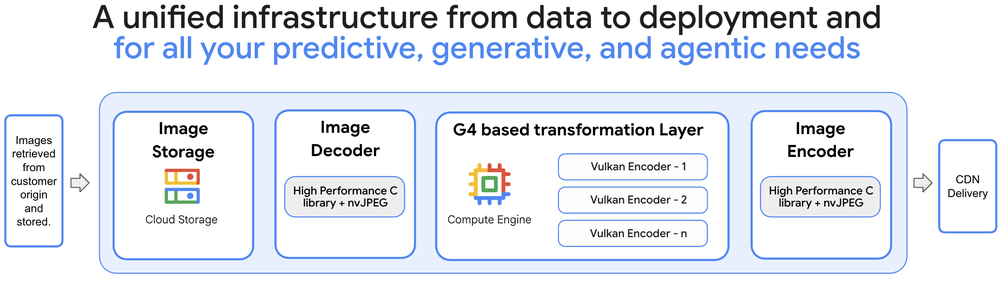
Separately, Google Cloud spotlighted customer infrastructure scale in a case study on Imgix, which it says processes and serves more than 8 billion images and videos daily. The post describes how Imgix uses G4 VMs powered by NVIDIA Blackwell to support real-time, high-fidelity media workloads for brands including Bugatti, Yeti, Porsche, Spotify, and Sonos.
Google positions the story as an example of growing demand for fast, personalized, performance-oriented digital media delivery at global scale.
What ties these updates together
Across both cloud providers, the common theme is operational leverage:
- AWS is adding more automation around capacity planning, resilience, security review, and data platform efficiency.
- Google Cloud is emphasizing AI-driven enterprise execution and the infrastructure needed for massive, real-time workloads.
- Open technologies such as Apache Iceberg continue to show up as important building blocks in modern data architectures.
For practitioners, the practical takeaway is clear: cloud platforms are increasingly packaging proactive operations directly into managed services, whether that means scheduling serverless capacity ahead of demand, automatically mitigating zonal failures, or simplifying governed access to machine learning features.
References & Credits
- AWS Lambda supports scheduled scaling for functions on Lambda Managed Instances
- Amazon EventBridge Scheduler adds 619 new SDK API actions, including Lambda Managed Instances
- AWS Security Agent now supports full repository code reviews
- Amazon SageMaker Feature Store now supports SageMaker Python SDK V3
- Karpenter now supports Amazon Application Recovery Controller zonal shift
- Amazon Redshift introduces AWS Graviton-based RG instances with an integrated data lake query engine
- SAP SAPPHIRE 2026: Google Cloud unveils unified agentic vision and massive compute scaling
- How Imgix processes 8 billion images daily with G4 VMs powered by NVIDIA Blackwell