

AI tooling shifts from coding assistants to infrastructure, ops and engineering workflows
A look at recent AI themes: GitHub’s new Copilot app, forward deployed engineers, open-sourced agents, requirements analysis, energy efficiency and why AI still struggles in the SOC.
Recent AI coverage shows the market moving in several directions at once: developer tooling is getting new dedicated interfaces, companies are creating new AI-adjacent roles, infrastructure efficiency is under pressure, and enterprise teams are still wrestling with where AI actually works in practice.

Developer tools are becoming standalone products
GitHub’s latest move with Copilot is to give the coding assistant its own dedicated app, positioning it more directly against tools such as Claude Code and Codex. Even from the limited source text, the direction is clear: coding assistants are no longer just features tucked inside other environments, but products that increasingly need a home of their own.
That shift reflects a broader trend in AI software: interfaces matter. As assistants become more central to development workflows, vendors are packaging them as primary experiences rather than add-ons.
A new AI job title is gaining heat: forward deployed engineer
Another sign of the market’s evolution is the rise of the forward deployed engineer, highlighted as one of AI’s hottest jobs amid hiring competition from OpenAI and Google. The source frames the role as notable enough to sit among the week’s most important AI developments, underscoring how demand is extending beyond model builders to people who can help customers apply AI in real-world environments.

The prominence of this role suggests that implementation, integration and customer-specific deployment are becoming strategic differentiators in the AI race.
Internal AI tools are being pushed outward
Block’s decision to hand Goose to the Linux Foundation points to another pattern: internal tools can evolve into broader platforms or public infrastructure. The source explicitly compares this dynamic to how internal capabilities can become powerful external services.
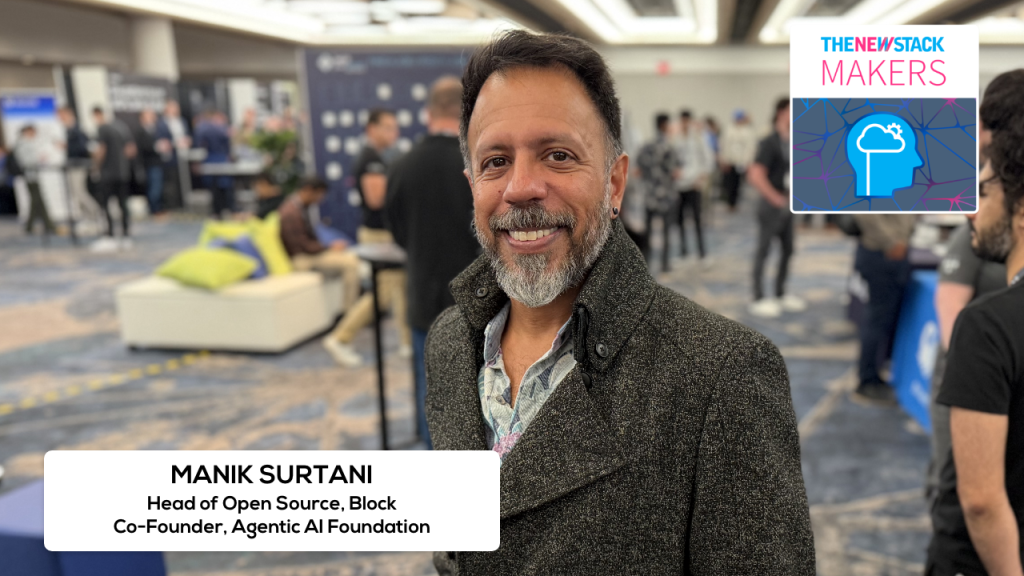
For AI and agentic software, that matters because governance, neutrality and ecosystem participation can become just as important as the technology itself. Moving a project into a foundation can signal an intent to grow adoption beyond the company that originally built it.
Some of the biggest software problems still start before code
AWS’s findings offer a useful counterweight to the idea that more AI is always the answer. The article highlights a striking claim: the most expensive bugs in software are not in the code, but in the requirements used to guide development, and AWS found bugs in 60% of software requirements.

The source’s central takeaway is that fixing software quality may depend less on adding more AI and more on improving reasoning about requirements.
That framing is important because it broadens the current AI conversation. Instead of focusing only on generation, it emphasizes verification, rigor and the value of older logic-based approaches in modern software pipelines.
AI’s energy problem may need software answers, too
AI’s strain on energy infrastructure is another recurring concern. One source argues that the load AI places on energy systems should not be underestimated and explores a software-oriented path to reducing AI’s energy bill without relying on new hardware.

That matters because hardware supply, power availability and operating cost are increasingly linked. If efficiency gains can come from software changes, that opens a path to improvement that may be faster to deploy than waiting for the next infrastructure cycle.
In security operations, AI still runs into messy realities
Enterprise security is another area where AI expectations are colliding with operational complexity. The SOC-focused article argues that despite vendor messaging, AI tools are falling short in security operations centers.

Even with only the source summary available, the theme is familiar: success in security often depends on context, data quality and unified operations, not just dropping in a model and expecting automation to work. AI can be promising, but fragmented environments can limit its impact.
The bigger picture
- AI coding assistants are becoming standalone experiences.
- New job categories are emerging around deployment and implementation.
- Internal agentic tools are being externalized through open governance models.
- Software quality problems still begin upstream in requirements.
- Energy pressure is making software efficiency more important.
- Operational domains like the SOC expose the limits of AI hype.
Taken together, these stories suggest a more grounded phase of the AI market. The emphasis is shifting from novelty toward packaging, deployment, governance, verification, efficiency and operational fit.
References & Credits
- GitHub takes aim at Claude Code and Codex with its new Copilot app — The New Stack
- Forward deployed engineer is AI’s hottest job as OpenAI and Google race to hire. Here’s how to become one. — The New Stack
- Why Block handed Goose to the Linux Foundation — The New Stack
- AWS found bugs in 60% of software requirements. Its fix isn’t more AI — it’s a 50-year-old logic engine. — The New Stack
- The software fix that could shrink AI’s energy bill without new hardware — The New Stack
- Why AI is failing in the security operations center — The New Stack