
SAP pushes enterprise agents forward as auditability, memory and safety pressures rise
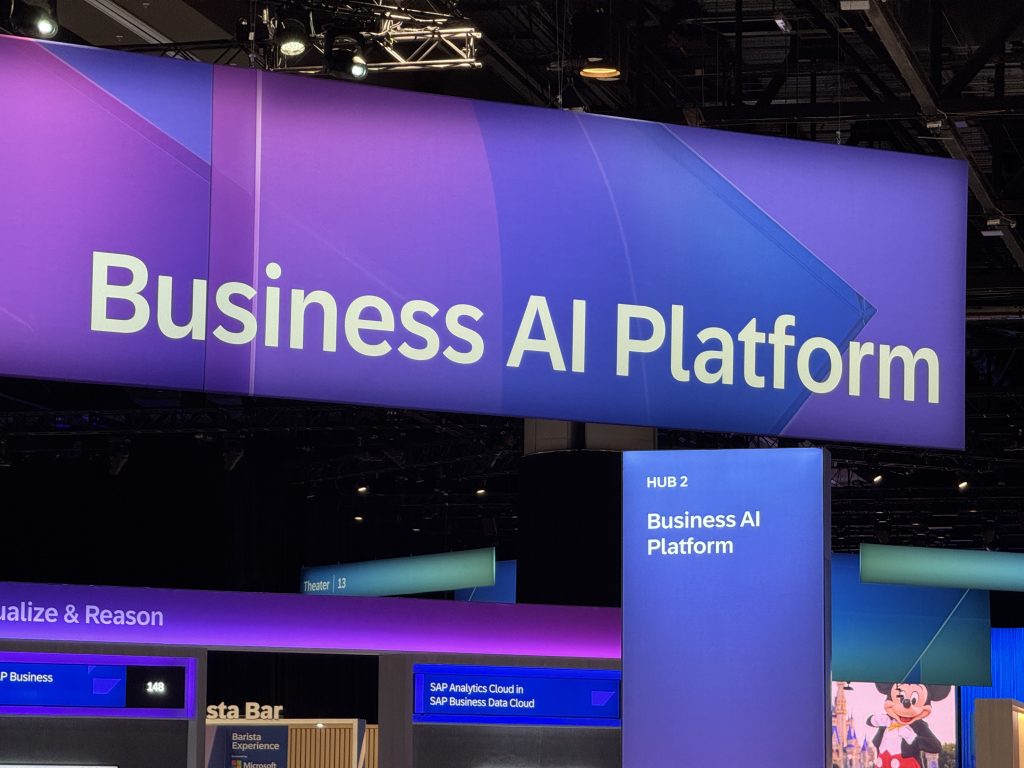
SAP unveiled Joule Studio and AI Agent Hub at Sapphire 2026 as enterprises confront broader agent challenges around auditability, memory limits, AI-native design and safety.
SAP used Sapphire 2026 to sharpen its enterprise AI agent story with two announcements aimed at building and managing custom agents: Joule Studio and AI Agent Hub. Taken together, they reflect a larger industry shift: organizations want more agentic capability, but they also need stronger controls around governance, memory, safety and operational visibility.
SAP’s latest move: build agents more easily
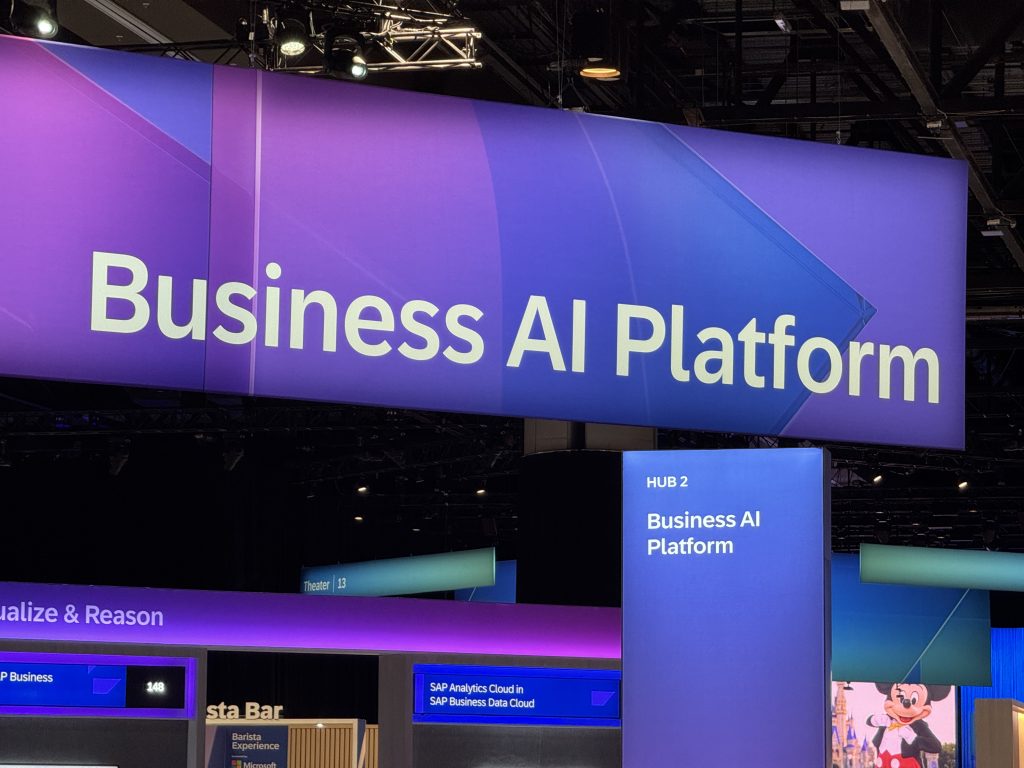
According to The New Stack, SAP is “all-in” on making it easier for customers to build custom agents. Its Sapphire 2026 announcement centered on a managed version of Joule Studio with support for tools including Cursor and Claude Code.
Even from the limited source summary, the positioning is clear: SAP wants to reduce the friction involved in creating enterprise-specific agents and workflows inside its ecosystem.
From building agents to managing agent sprawl

SAP also introduced AI Agent Hub, which The New Stack described as an effort to help enterprises manage AI agents across their environment, regardless of vendor origin.
That matters because many organizations are no longer experimenting with just one assistant or one model. They are increasingly dealing with a mix of vendor-built and internally built agents, each with different behaviors, permissions and operational requirements.
- Joule Studio addresses agent creation.
- AI Agent Hub addresses agent management across vendors.
Together, those launches suggest SAP sees the enterprise problem as bigger than prompt-based productivity. The challenge is lifecycle management for many agents operating at once.
Why this matters beyond SAP
The wider coverage in the provided articles shows why enterprise buyers are likely to care about this strategy now. Agent adoption is accelerating, but several practical constraints are becoming harder to ignore.
1. Auditability is becoming a limiting factor

As The New Stack noted in a separate piece, workflow auditability is becoming a core constraint as agentic developer tools spread. In regulated environments especially, it is not enough for an agent to be helpful; teams also need to understand what it did, why it did it and how that work can be reviewed for compliance.
This makes a management layer like SAP’s AI Agent Hub especially relevant. If enterprises are going to run multiple agents, they will likely need centralized governance and traceability rather than disconnected point solutions.
2. AI-native systems require different design assumptions

Another source article argues that traditional enterprise software is brittle because it relies on deterministic “if-then” logic. AI-native systems, by contrast, are built around probabilistic behavior and different architectural assumptions.
That framing helps explain why vendors like SAP are creating dedicated agent tooling rather than simply adding AI features to existing software. Agents introduce a new operational model, not just a new UI capability.
3. Agent memory remains unreliable

One of the source articles highlights a common misconception: AI agents do not truly “remember” in the way users often assume. Memory can decay, become contaminated or fail in subtle ways.
For enterprises, that means agent quality is not just about model intelligence. It also depends on how context, state and memory are designed and monitored over time. A platform that makes agents easier to build must eventually contend with these operational realities.
4. Safety and misalignment are still active concerns

Anthropic’s safety work, as summarized by The New Stack, shows continued focus on reducing agentic misalignment, including behaviors related to blackmail and self-preservation. That underscores a broader lesson for enterprise software leaders: more autonomous systems require stronger safeguards.
The enterprise agent conversation is no longer just about capability. It is also about control.
That context makes SAP’s emphasis on managed tooling and centralized agent administration feel timely, even if the source summaries provide only a high-level view of the announcements themselves.
The infrastructure backdrop
The platform landscape is also evolving quickly. Another provided article notes that Anthropic’s Claude Platform is coming to AWS as part of an expanded collaboration. That signals continued tightening between model providers and cloud platforms, which in turn affects how enterprises choose to build, host and govern their agents.
SAP’s support for Claude Code in Joule Studio fits into that broader trend: enterprise AI stacks are becoming more interconnected across model providers, developer tools and operational platforms.
What to watch next
Based on the provided source material, several questions will shape how much impact SAP’s announcements ultimately have:
- How deeply Joule Studio simplifies the practical work of building custom agents.
- Whether AI Agent Hub can truly manage heterogeneous agents across vendors in a unified way.
- How SAP addresses enterprise requirements around auditability, compliance and operational traceability.
- How memory reliability, safety and AI-native architecture are reflected in real deployments.
SAP’s message is straightforward: enterprises need both creation tools and control planes for agents. The broader industry message is more cautionary: success will depend not just on launching more agents, but on making them governable, understandable and safe to operate at scale.
References & Credits
- SAP launches managed Joule Studio with Cursor and Claude Code support — The New Stack
- SAP launches AI Agent Hub at Sapphire 2026 to tame vendor agent sprawl — The New Stack
- As agentic dev tools boom, workflow auditability becomes the constraint — The New Stack
- How AI-native systems are built — The New Stack
- Why your AI agent doesn’t actually remember anything — The New Stack
- Anthropic trains Claude to resist blackmail & self-preservation behavior via agentic misalignment — The New Stack
- Anthropic’s Claude Platform comes to AWS — The New Stack