
What the agent era is exposing in AI infrastructure, workflows and enterprise memory
A look across recent agent-focused launches and debates: data stack pressure, GPU recompute costs, workflow durability, enterprise skill reuse and the growing need for better developer controls.
The latest wave of AI announcements points to a common theme: the visible chatbot or copilot is only a thin layer over deeper infrastructure questions. Across recent reporting, the pressure points show up in data access, GPU efficiency, workflow reliability, institutional knowledge and developer oversight.
Taken together, these stories suggest that the agent era is less about one breakthrough model and more about whether the surrounding stack can keep up.
Agents are putting new pressure on data systems
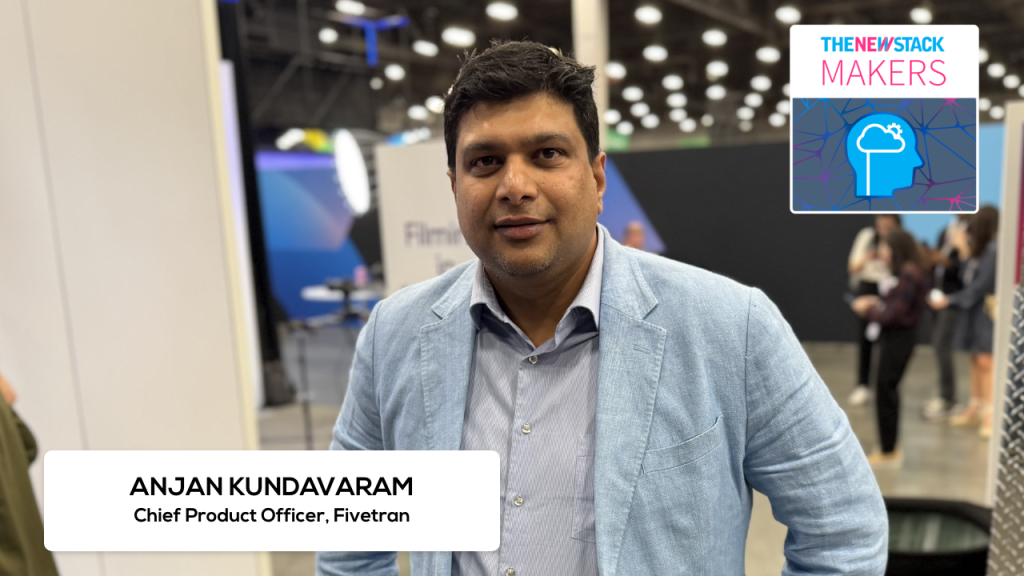
One of the clearest signals comes from concerns about query volume. According to The New Stack's coverage of Fivetran's CPO, an AI agent operating against a data warehouse can generate far more queries than a human user. The article frames that jump as potentially tenfold or even hundredfold, underscoring why closed data stacks may struggle as agentic analytics scales.
The implication is straightforward: if agents become routine interfaces to analytics systems, architectures built for predictable human-driven access may face both technical and cost stress.
An AI agent let loose on a data warehouse can run ten or a hundred times more queries than a human-driven workflow, highlighting the cost squeeze behind agentic analytics.
The expensive hidden layer: recompute and GPU utilization
Another recurring concern is efficiency below the application layer. Reporting on MinIO's MemKV positions the current agentic AI boom as dependent on less glamorous backend work, especially around avoiding recompute overhead.
The article's headline claim is especially notable: MemKV promises 95% better GPU utilization by ending what it calls the AI recompute tax. Even without more implementation detail in the source text provided here, the larger point is clear: organizations are now competing not just on model quality, but on how efficiently they can keep expensive accelerators busy.

Institutional memory may matter more than bigger models
Enterprise value in agents may depend as much on accumulated know-how as on raw model capability. In coverage of Red Hat's new skill packs, The New Stack describes the company's view that access to agent skills could represent AI's next inflection point.
The framing is important: Red Hat is arguing that what a company has learned over decades can be packaged into reusable agent skills. That suggests a competitive advantage that does not come from simply adopting a larger model, but from operationalizing domain-specific expertise and institutional memory.

Developers still want better control surfaces
As agents take on more tasks, visibility and control become more important. Anthropic's new agent view for Claude Code is presented as a CLI dashboard for managing multiple Claude Code sessions. Yet the article's title itself captures the tension: improved dashboards do not automatically win developer trust.
That skepticism matters. If teams are expected to supervise multiple simultaneous agent sessions, the interface becomes part of the safety and productivity story. Better orchestration views may be necessary, but the source article suggests they are not yet sufficient to convince developers on their own.
Reliability is becoming a first-class requirement for AI workflows
Agentic systems also need durable execution. The New Stack's coverage of Temporal emphasizes the company's "crash-proof workflow engine" and notes it has reached 3,000 paying customers.
That milestone supports a broader interpretation: as AI workflows become longer-running and more operationally important, teams are looking for infrastructure that can survive failures and resume work reliably. In other words, the workflow engine is becoming part of the agent stack, not just a background platform choice.

A broader pattern: the agent era is shifting competition down-stack
Across these reports, the visible AI layer is only one part of the story. The pressure is moving into the underlying systems:
- Data platforms must handle dramatically higher query activity from autonomous or semi-autonomous agents.
- Infrastructure layers are being judged on whether they reduce waste, especially around GPU recompute and utilization.
- Enterprise platforms are trying to encode years of organizational experience into reusable skills.
- Developer tools must make agent activity easier to supervise and reason about.
- Workflow engines are increasingly central because resilient execution matters when AI tasks span many steps.
If there is a unifying takeaway, it is that the next phase of AI adoption may hinge less on model novelty and more on whether the surrounding architecture is open, efficient, durable and usable.
References & Credits
- Fivetran’s CPO: Closed data stacks won’t survive the agent era — The New Stack
- MinIO’s MemKV promises 95% better GPU utilization by ending AI recompute tax — The New Stack
- Red Hat’s skill packs give AI agents something a bigger model never could: 20 years of institutional memory — The New Stack
- Anthropic’s Claude Code agent view is a better dashboard. So why aren’t developers convinced? — The New Stack
- Temporal hits 3,000 paying customers with its crash-proof workflow engine — The New Stack